Thursday, 11 January 2018

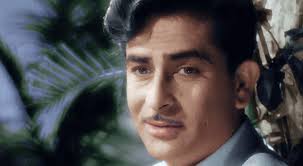
RAJ KAPOOR

Raj Kapoor  (14 December 1924 - 2 June 1988)

Ranbirraj Kapoor, Peshawar, India (now Pakistan), (Born - 14 December 1924, Died - 2 June 1988) 
Raj Kapoor is the quintessential Bombay industry filmmaker of the Nehru era. His career spans the first four decades following independence, from 1947 to 1988, coinciding with Nehruvian socialism. In 1991 socialism was abandoned in favor of "liberalization," opening India's economy to the West. In the 1950s Kapoor translated his own admiration and his generation's enthusiasm for Prime Minister Nehru's vision into extremely popular Hindi films, which he infused with his unique mix of populist politics and sentimentality. 

Prithviraj Kapoor

Raj Kapoor's father, Prithviraj Kapoor, was an established film actor by the 1940s, and Raj's career developed rapidly. After minor roles and his debut as a leading man in Neel Kamal (Blue Lotus, 1947), he acted in and directed Aag ( Fire , 1948), followed by successes as actor in and director of Barsaat ( Rain , also known as The Monsoons , 1949), and as actor in Andaz ( A Matter of Style , 1949), the latter two films pairing him unforgettably with the actress Nargis. In 1951 he launched his own studio, R. K. Films, which his son, Randhir, took over in 1988 (his granddaughters, Karisma and Kareena Kapoor, also joined the film industry in the late 1980s and 1990s, respectively). 

Kapoor chose dramatic dichotomies to play up the conflicts that Hindi films emphasize: between city and country, modernity and tradition, West and East, rich and poor. His protagonists, inevitably underprivileged, are drawn inexorably to the city, only to discover the pervasive corruption and danger lurking beneath its glossy surface. This exposition reinforces the protagonist's moral fortitude to surmount his travails and, together with his love interest, surge toward a joyous future while at the same time apparently valorizing "Indian" values. Conscious of international cinema, Kapoor paid homage to Charlie Chaplin by adapting the figure of the tramp, and the narratives unfold from his point of view in the greatest R. K. Films of the 1950s, Awaara ( The Vagabond , 1951) and Shri 420 ( Mr. 420 , 1955), both of which he starred in and directed. Kapoor became an unofficial ambassador of Indian cinema; he was warmly received in the Soviet Union when he visited in the 1950s, and his popularity spread in the Middle East, China, and Africa, where songs from his films were translated into local languages. 


In the postwar era stars were powerful figures, and their offscreen lives mediated the public discourse on morality. Raj Kapoor's extended affair with co-star Nargis was a scandal he circumvented by staying in his marriage and representing himself in the public eye as a "family man," a family that is now virtually a film industry empire built over four generations. Deftly combining "art and commerce"—his functional definition of popular cinema—Kapoor was a phenomenal success in the 1950s and 1960s. In the 1970s and 1980s his output dwindled dramatically. Barring the hit teen romance Bobby (1973), in which he did not appear, his often ambitious and thinly autobiographical films from these decades lost touch with the popular mood and failed at the box office, oddly paralleling the troubles besetting the Nehruvian project. 

INDIAN CINEMA AFTER INDEPENDENCE

Amid the deprivations of World War II (including shortages of raw film stock), increased colonial censorship, a devastating famine in Bengal, and the traumatic partition of India and Pakistan upon independence in 1947, the studio system in India came to an end. But the optimism of the era embodied by the first prime minister, Jawaharlal Nehru (who served from 1947 to 1964), also led to a revitalized Hindi cinema under the impact of new independent production companies established by key directors like Mehboob Khan (1907–1964) and Bimal Roy (1909–1966).


 In addition, actor-directors like Raj Kapoor (1924–1988) and Guru Dutt (1925–1964) became brand names in the industry: Kapoor created R. K. Films; Sippy and Rajshree Films became the banner for several generations of the Sippy and Barjatya families, respectively; and brothers B. R.Chopra and Yash Chopra created their own B. R. Chopra and Yashraj production companies. Previously unknown artists dislocated by Partition arrived from the newly created state of Pakistan and rose to stardom as actors, directors, or producers, becoming urban legends.


Bimal Roy (1909-1966)

Raj Kapoor
The rich body of films produced in the 1950s, the decade following independence, frequently balanced entertainment and social commentary, the latter often supplied by an infusion of talent affiliated with the leftist Progressive Writers Association and the Indian Peoples' Theatre Association, a talent pool that marshaled cinema for covert political messages before independence and continued to project Nehru's optimism about nation-building for about a decade after independence. Driven by stars and songs, the popular cinema firmly established itself in the daily lives and cultural imaginations of millions of Indians as well as audiences in the Soviet Union, China, and elsewhere. This "golden age" of Hindi cinema was ending just as Satyajit Ray's first films were receiving international attention, and the 1960s would draw sharp distinctions between formulaic commercial cinema and what would be called the New Indian Cinema, the latter signaling both a shift in form and content as well as a reliance on state-sponsored financing never available to mainstream cinema.


Guru Dutt
The 1970s was a period of rising worker, peasant, and student unrest. In this changing political climate, films became more strident in addressing endemic corruption and the state's inability to stem it, and upheld the victimized working-class hero as challenging the status quo. These films, including Deewar ( The Wall , 1975) and the massive hit Sholay ( Flames , 1975), became the insignia of superstar Amitabh Bachchan, who embodied the "angry young man" during Prime Minister Indira Gandhi's "Emergency" clampdown on civil liberties (from 1975 to 1977) and into the mid-1980s.


Dilwale Dulhania Le Jayenge (1995)
They departed significantly from 1950s films in their lack of optimism and from 1960s films in the radically truncated attention to the hero's romantic love interest. However, from the late 1980s on, the eclipse of Bachchan's centrality coincided with the revival of romance that returned to the screen as a culture war between the youthful (often Westernized) couple in love and their tradition-bound parents. In record-breaking hits like Dilwale Dulhania Le Jayenge ( The Brave Hearted Will Take the Bride , 1995) and Hum Aapke Hain Kaun ( Who Am I To You? , 1994), balancing the rights of rugged individualism and duty toward family and community took center stage.
Hum Aapke Hain Kaun ( 1994)

These films arrived against the backdrop of the Indian state's abandoning forty years of Nehruvian socialism for a market-driven "liberalized" economy at the end of the Cold War. Alongside these romance films about the changing family and the private sphere were slick portrayals of the urban (and occasionally the rural) underworld in proliferating gangster films such as Satya (1998)

Satya (1998)
and Company (2002), which mapped a decaying public sphere and audaciously represented onscreen the actual infiltration of the offscreen film world by underworld "black money" financing and extortion. Although cinema remains extremely popular in India.

Company (2002)